
Coffee Origin
Coffee Origin
Dayati Coffee presents Aceh Gayo coffee with a clearer origin story, practical traceability information, and visual documentation from farm activity to post-harvest handling and roasting review. This page is built for buyers who want more than a product photo. It explains how the coffee is connected to its place, people, process, and supply discussion.
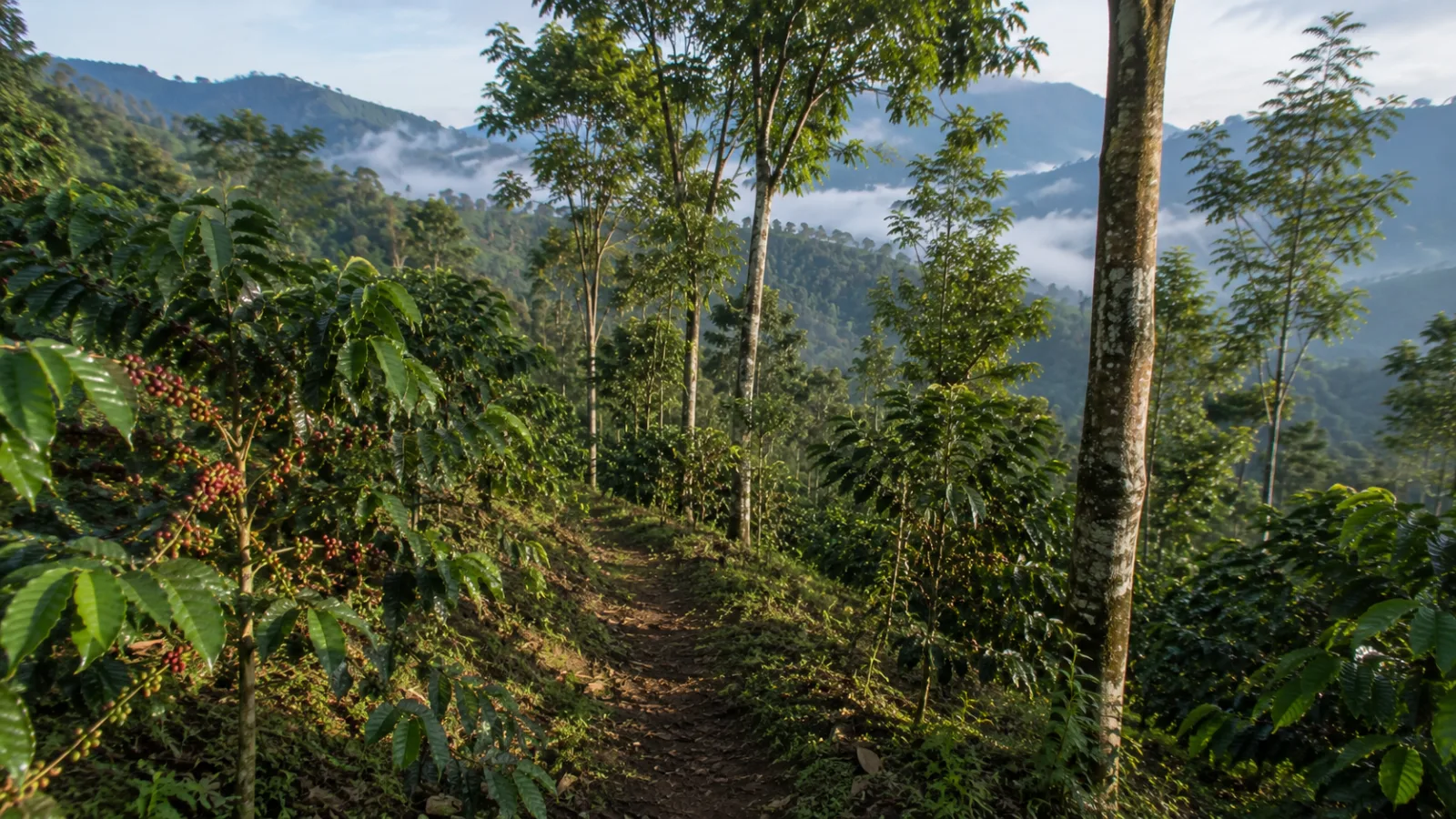
Aceh Gayo Highlands, Indonesia
Gayo coffee is associated with the highland areas of Aceh, Indonesia. The region is known for Arabica coffee grown in a mountain environment where elevation, cooler air, fertile soil, and careful post-harvest work influence the cup. Dayati Coffee uses this origin page to explain the region and the traceability points buyers can reasonably review before ordering.
Aceh Gayo Origin Map
This map provides a practical location reference for the Aceh Gayo coffee origin area around Takengon, Aceh Tengah, Indonesia. It helps international buyers understand the regional context behind Dayati Coffee’s Gayo Arabica coffee.
- Map ReferenceTakengon, Aceh Tengah, Aceh, Indonesia
- Coordinates4.6210° N, 96.8470° E
- Kecamatan ReferenceLut Tawar, Aceh Tengah
- Nearby Gayo AreaBebesen, Kebayakan, Pegasing, and surrounding Aceh Gayo highland coffee areas
Note: This is a regional origin reference, not a farm-level GPS claim for every coffee batch. Batch-specific origin details, documents, or farm-level information should be requested and confirmed before ordering when needed.
From Harvest to Shipping
This timeline shows the practical supply path buyers can use to understand how Gayo coffee moves from farm activity into prepared coffee products and shipping discussion.
-
1
Harvesting
Ripe coffee cherries are collected from the Gayo highland farm environment.
-
2
Sorting
Cherries or beans are checked to reduce visible defects and improve consistency.
-
3
Processing
Process style is handled according to the product, such as full wash, natural, honey, or wine process.
-
4
Drying
Drying supports stability, storage quality, and the final cup profile.
-
5
Roasting
Roast profile is prepared to match the intended product and buyer preference.
-
6
Packaging
Coffee is supplied as Dayati Coffee products with packaging details confirmed before purchase.
-
7
Shipping
Shipping cost and delivery discussion depend on order quantity and destination.
Available for Retail and Global Buyer Inquiries
Dayati Coffee is prepared for buyers who need clear product information, sample discussion, wholesale communication, and international shipping planning before ordering.
- Retail Orders
- Sample Orders
- Wholesale Inquiry
- International Shipping
Why Coffee Origin Matters for Serious Buyers
For international buyers, coffee origin is not just a romantic story written on a package. Origin is part of product confidence. It helps a buyer understand why one coffee tastes different from another, why supply may be seasonal, why processing styles affect cup character, and why clear communication is important before samples or bulk orders are confirmed. When a buyer is comparing Indonesian specialty coffee, Gayo Arabica coffee, wild luwak coffee, roasted beans, or green coffee supply, origin information becomes a practical tool for decision making.
A strong origin page should answer several questions. Where is the coffee connected to? What kind of environment shapes the coffee? Who handles the cherries after harvest? What happens during sorting, drying, roasting, and preparation? Which details can be verified for a current order? Dayati Coffee does not treat traceability as a decoration. The goal is to give buyers enough context to ask better questions and avoid unclear claims.
This is especially important for global buyers because a website can look polished while still saying very little. Many coffee listings only show a bag, a price, and a few tasting words such as smooth, premium, authentic, or specialty. Those words can be useful, but they are not enough. A buyer who wants reliable coffee needs context around region, harvest, processing, quality review, packaging, and shipping. Dayati Coffee uses this page to bring those elements together in one place.
Traceability should reduce uncertainty.
Good origin information helps buyers understand what is known, what can be requested, and what should not be overclaimed. It is better to be clear than to promise documents or certifications that are not available for every batch.
Aceh Gayo as a Coffee Origin
Aceh Gayo is one of the most recognized Arabica coffee origins in Indonesia. The highland environment supports coffee with a cup profile often associated with smooth body, rounded sweetness, aromatic depth, and balanced acidity. The exact flavor depends on many factors, including variety, altitude, ripeness, fermentation, drying, storage, roast profile, grind size, and brewing method. Still, the region gives buyers a meaningful starting point when comparing coffee from Indonesia.
Dayati Coffee presents Aceh Gayo as the primary origin identity because it gives the product a clear regional foundation. A buyer does not need vague words. They need to know the coffee is connected to Gayo highlands in Aceh, Indonesia, and that product discussion can continue from there. For retail buyers, this builds confidence. For cafes and roasters, it supports menu storytelling. For wholesale and export inquiries, it makes the first conversation more specific.
The landscape also matters because coffee is an agricultural product. Mountain conditions, shade, soil, rainfall, and harvest timing all influence the cherries before processing begins. Origin information cannot replace sample evaluation, but it gives buyers a clearer frame for understanding why Gayo Arabica coffee is valued in Indonesian specialty coffee.
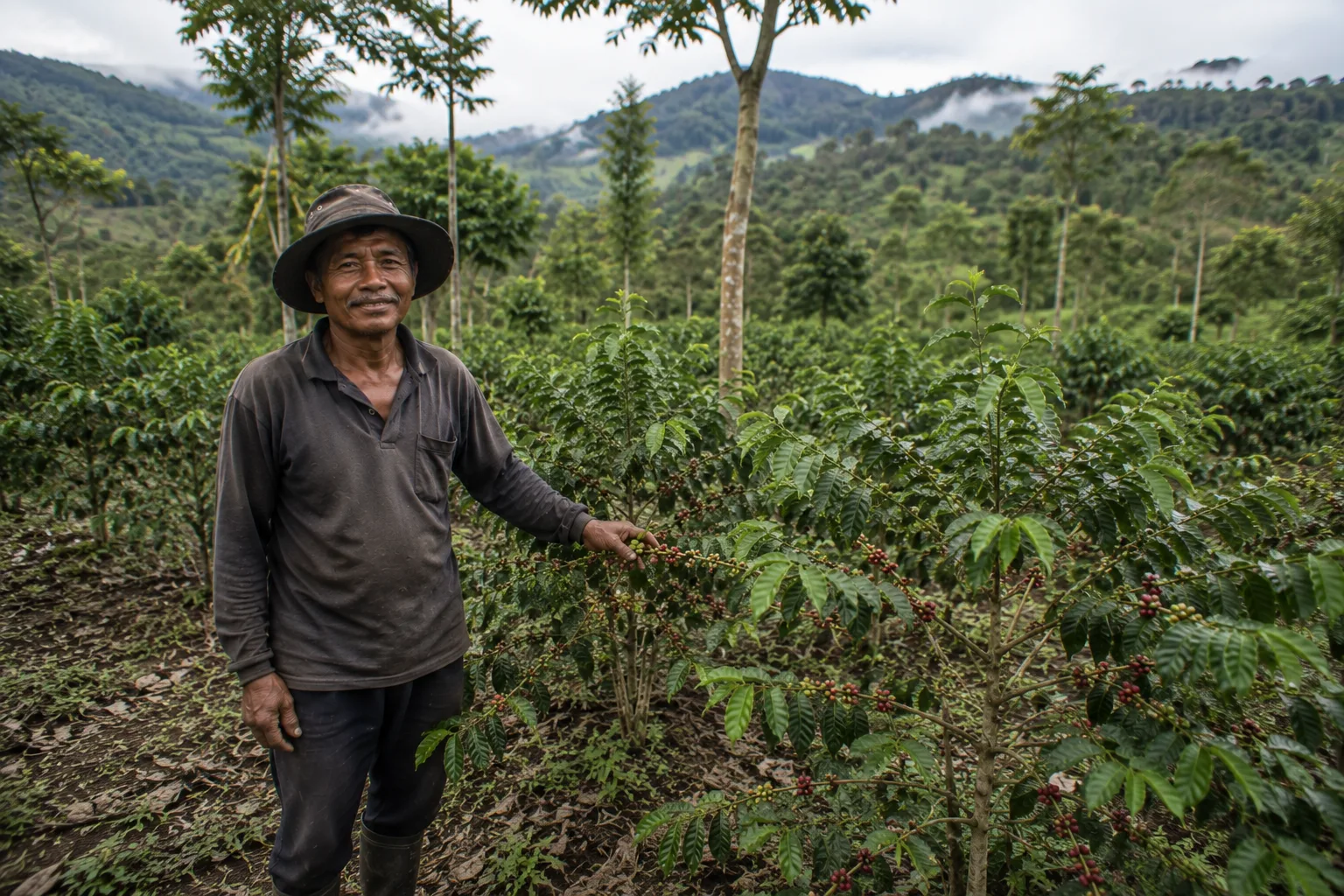
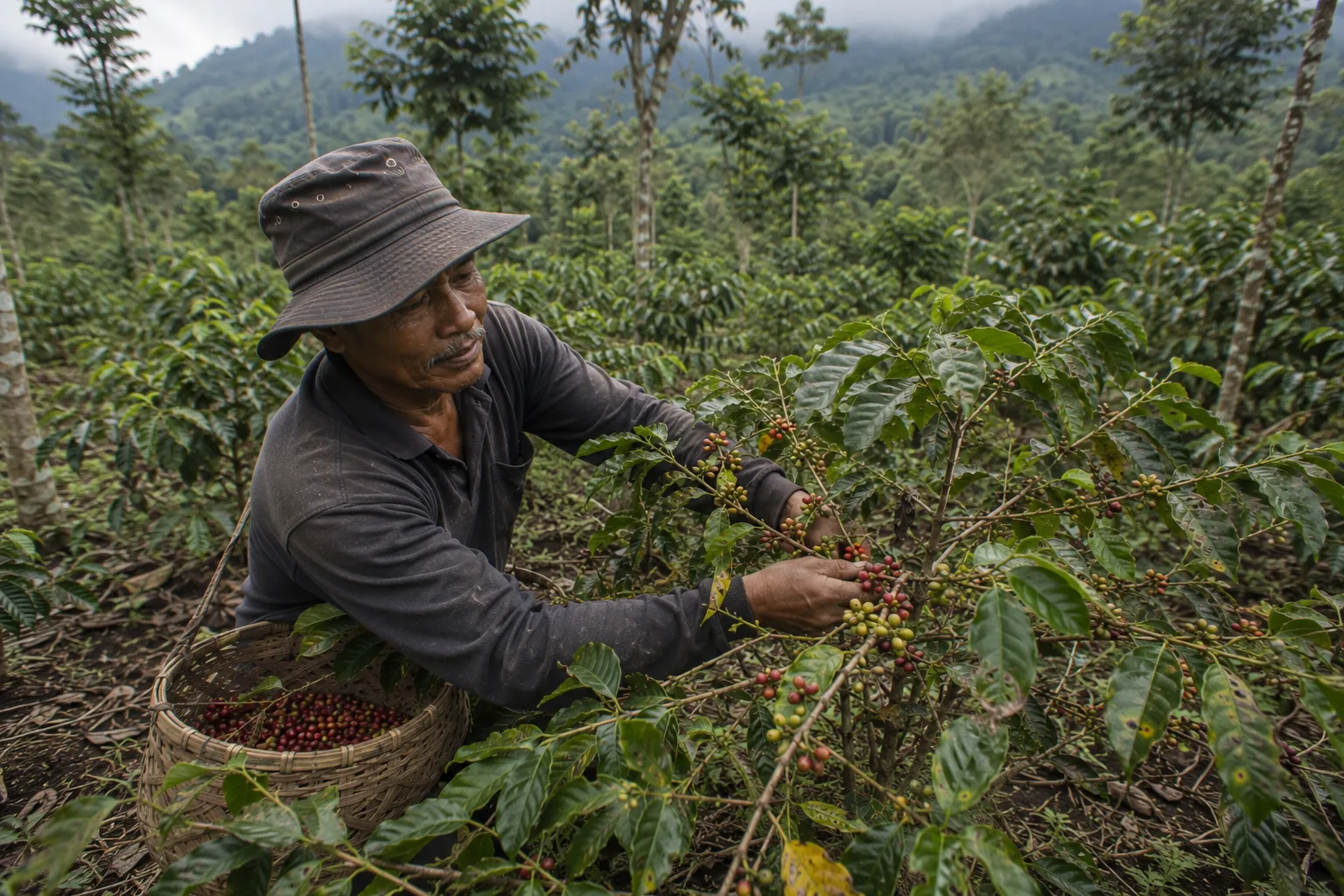
Farmers, Harvest, and the First Quality Decision
Traceability begins before the coffee reaches a roaster or a package. It begins with the cherry. Coffee quality is strongly influenced by picking decisions, cherry maturity, and early handling. Ripe cherries usually offer better potential for sweetness and balance, while uneven selection can make the cup less consistent. That is why harvest documentation matters. It shows that the story of quality starts at farm level, not at the final marketing stage.
Dayati Coffee keeps the language careful. We do not claim that every buyer order includes farm-level certification unless that information is confirmed for the specific supply. However, the product origin story can still be made stronger through real visual documentation, practical notes, and clear conversation about what is available. For serious inquiries, buyers can ask about current harvest context, process style, sample availability, roast profile, grind option, and packaging.
This approach is useful because it separates honest traceability from generic claims. A buyer may not always need a full export dossier for a small order, but they still deserve a clear explanation of where the coffee comes from and how the product is handled. For larger orders, the conversation can become more detailed and include available documentation, batch photos, or process notes where possible.
Traceability Points Dayati Coffee Can Explain
Traceability should be practical. Instead of making one broad claim, Dayati Coffee separates the origin story into specific information points. This makes the page more useful for buyers and also makes the product communication more transparent. The table below explains how each point supports buyer confidence.
| Traceability Point | What It Means | Why It Helps Buyers |
|---|---|---|
| Origin region | Aceh Gayo, Indonesia is presented as the regional identity for the coffee. | Buyers can understand the geographic story and compare it with other Indonesian coffee origins. |
| Farm landscape | Visual documentation shows the highland environment connected to Gayo coffee. | It makes the origin story more concrete and less dependent on empty claims. |
| Harvest and selection | Cherry picking, maturity, and sorting are discussed as early quality factors. | Buyers understand why raw material selection influences the final cup. |
| Processing | Full wash, natural, honey, wine, and other process styles may be discussed depending on product availability. | Buyers can match flavor expectations with processing method. |
| Roasting and preparation | Roast profile, grind size, and packaging are confirmed before purchase. | It reduces mismatch between product expectation and delivered coffee. |
| Buyer verification | Samples, product details, and available documentation can be requested during inquiry. | It supports safer purchasing decisions for cafes, roasters, and global buyers. |
Sorting and Post-Harvest Handling
After harvest, the next major quality stage is sorting. Sorting helps separate cherries or beans that may affect cup consistency. It can include removing underripe cherries, overripe cherries, damaged cherries, visible defects, foreign materials, or inconsistent pieces. The level of sorting can vary depending on the product, lot, supplier, and buyer requirement, but the principle is simple: better selection supports better cup potential.
Post-harvest handling is where Gayo coffee can begin to show different personalities. A washed coffee may emphasize clarity and cleaner acidity. A natural process coffee may lean toward fruitier aroma, heavier sweetness, and more fermented depth. A honey process coffee may sit between those impressions, often bringing sweetness and body while keeping a more controlled cup than some naturals. Wine process coffee can create more expressive aroma and layered fruit character. These descriptions are guides, not guarantees, because roast and brewing also shape the final experience.
For Dayati Coffee buyers, processing information is important because it helps prevent confusion. A buyer who wants a clean daily filter coffee may prefer one process, while a buyer who wants an expressive specialty gift product may prefer another. A cafe may ask for whole bean, while a home brewer may choose ground coffee. A roaster may ask about green coffee availability, but availability depends on current supply. Clear process communication makes those conversations easier.
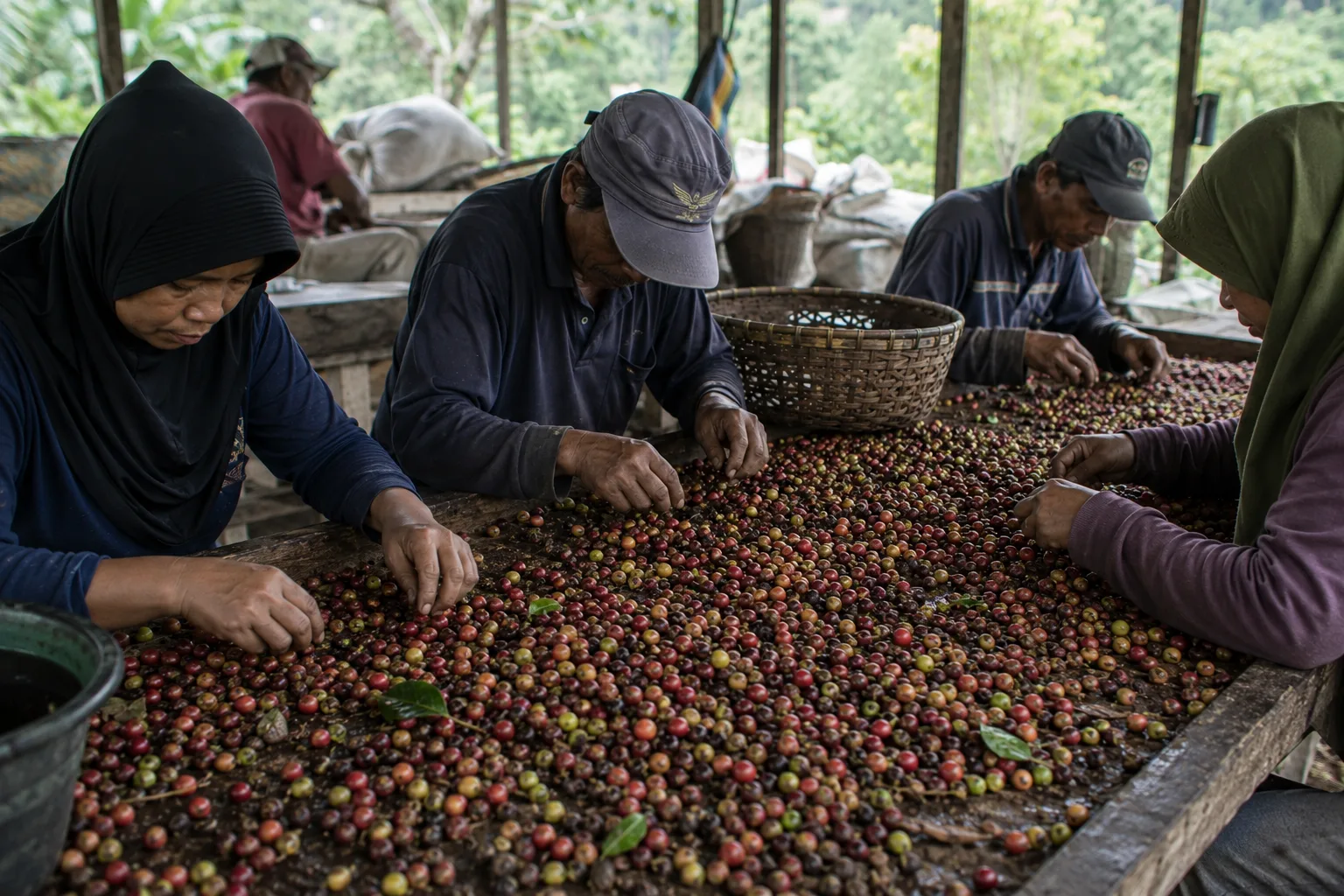
Drying Methods and Coffee Character
These images show post-harvest work and drying context. They help buyers understand that processing is not an abstract label. It is a real stage that can influence sweetness, body, acidity, aroma, and finish.
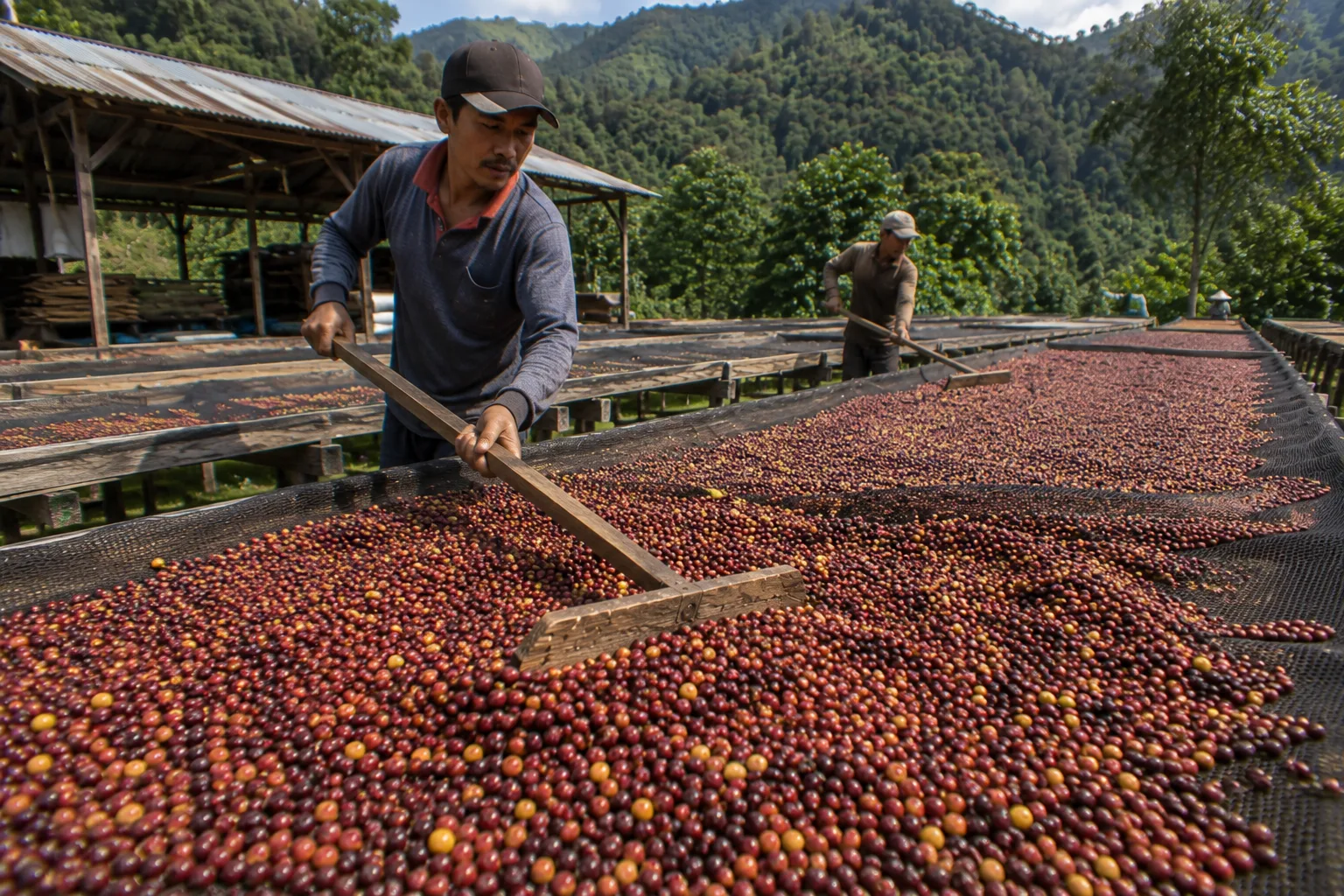
Natural Process Drying
Natural processing keeps the fruit involved longer during drying, which can create deeper sweetness, fruit aroma, and heavier body when handled carefully.
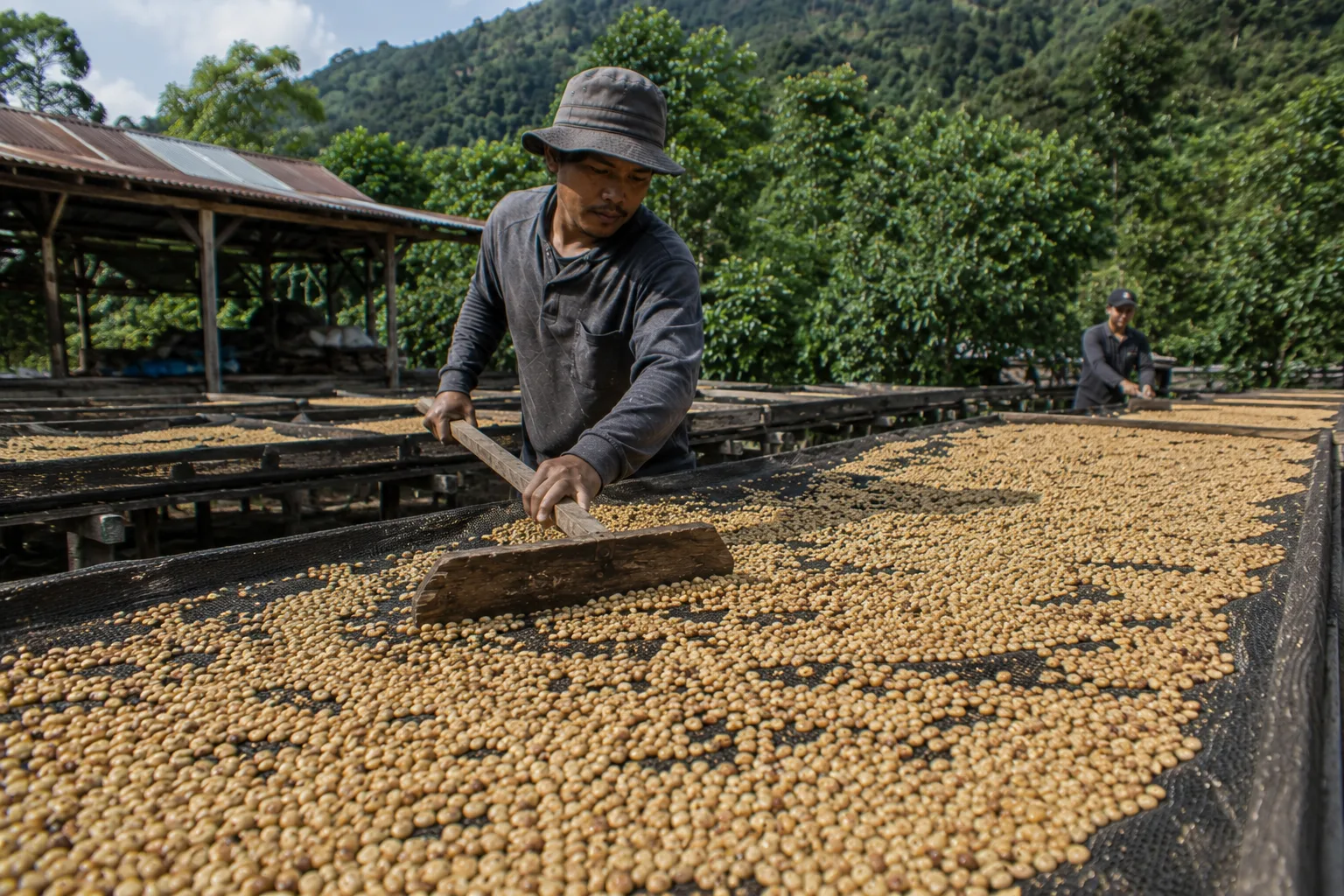
Honey Process Drying
Honey processing can support sweetness and texture while still giving buyers a more controlled flavor direction than some heavier natural lots.
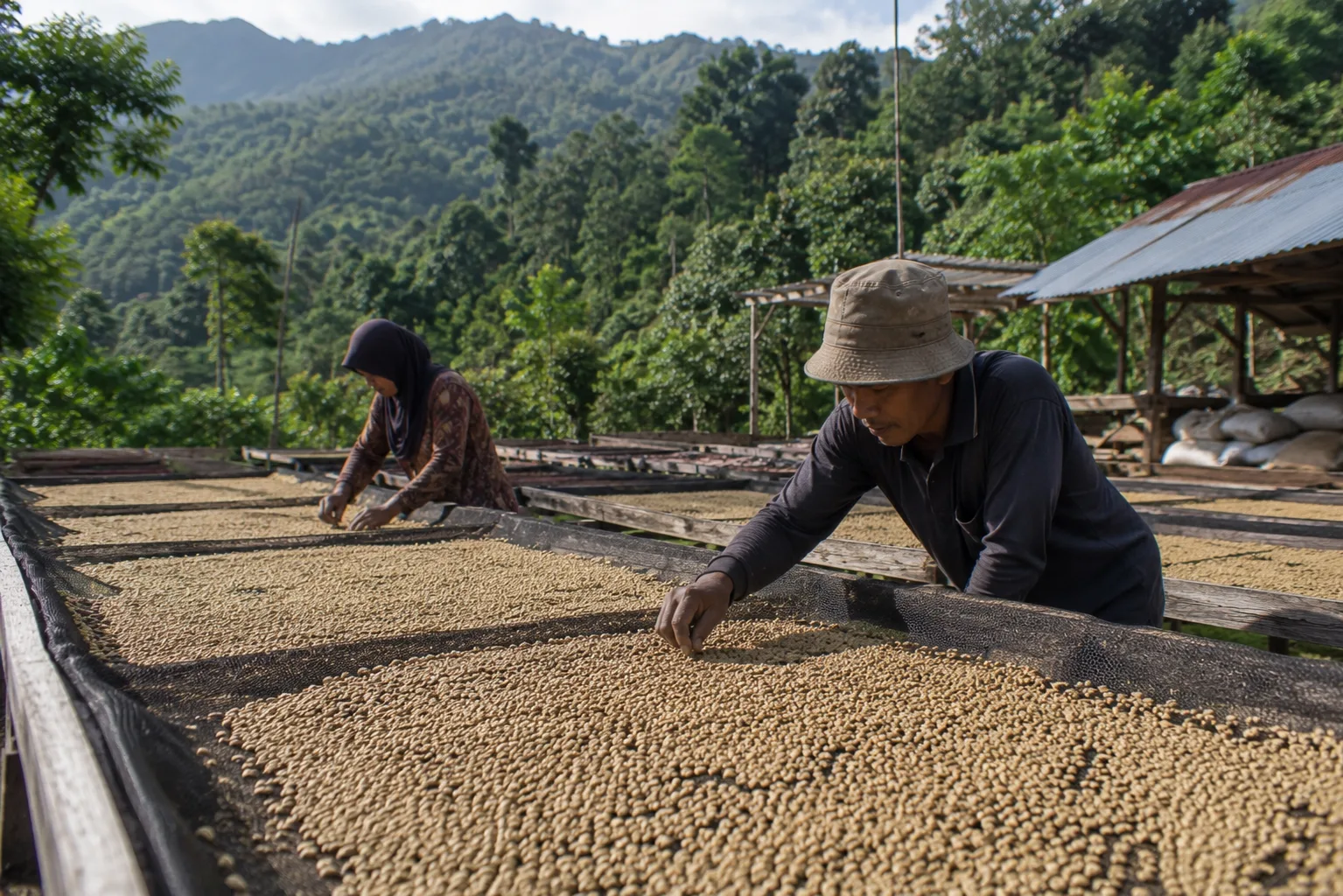
Parchment Drying
Drying on raised beds improves airflow and helps explain why post-harvest control matters for consistency, storage, and final cup quality.
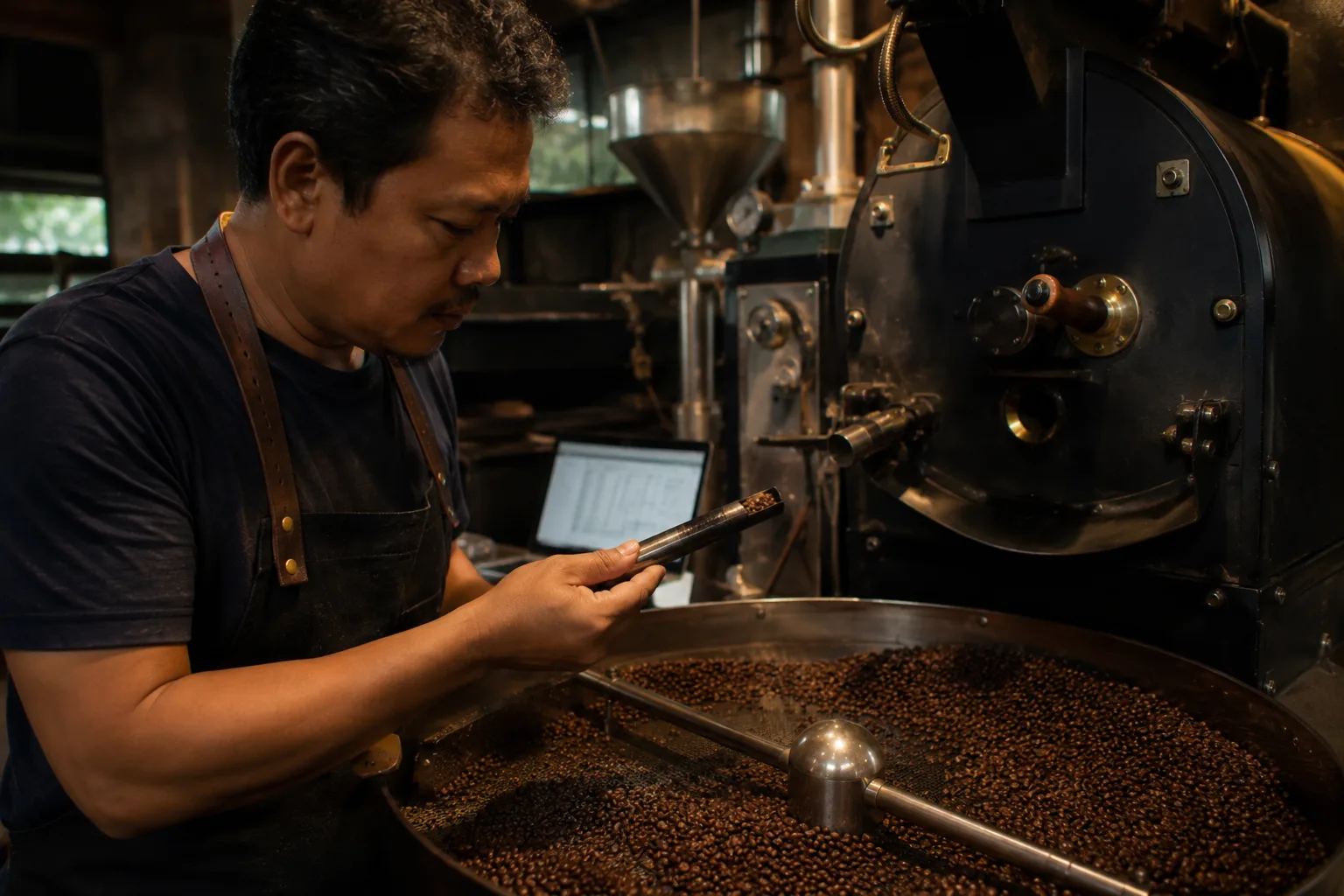
Roasting Review
Roasting review connects the green coffee story to the final product. Roast profile should support the intended cup, not hide origin character.
Roasting, Cup Review, and Product Preparation
Roasting is where a buyer finally sees how the origin and process translate into a prepared product. A lighter roast may preserve more acidity, aroma, and origin nuance. A medium roast may create a more balanced profile for daily brewing, combining body, sweetness, and aroma. Darker roasting may not be the best choice for every Gayo coffee if the goal is to show highland character, but buyer preference and market demand still matter.
Dayati Coffee gives buyers practical options such as roast profile and grind size where available. This matters because a good coffee can still disappoint if it is prepared in the wrong format. Whole bean is usually better for buyers who grind fresh. Coarse grind can work for immersion methods. Medium grind is common for pour-over or drip-style brewing. Fine grind can be useful for certain strong extraction methods, but it must be matched carefully with brewing equipment.
Quality review should include more than taste words. Buyers should consider aroma, body, sweetness, acidity, aftertaste, cleanliness, roast consistency, packaging condition, and whether the product matches their intended use. A cafe may need a coffee that performs well with milk or manual brewing. A gift buyer may care more about story and premium presentation. A roaster may want green coffee and process detail. A distributor may need stable supply and clear shipping communication. Origin information supports all of those use cases.
For export or international retail orders, shipping and packaging also become part of the quality experience. Coffee is sensitive to moisture, heat, oxygen, and time. Dayati Coffee gives buyers clear discussion around product form, quantity, shipping cost, and expected handling. The goal is to avoid unclear promises and make each order easier to plan.
What Buyers Can Request Before Ordering
Traceability is strongest when buyers can ask specific questions. Dayati Coffee encourages serious buyers to request details before ordering, especially when they need samples, repeat supply, larger quantities, or international shipping discussion.
Important: Dayati Coffee keeps origin claims careful. Farm-level certification, exact GPS location, lab reports, export documents, or batch-specific documents are only stated when they are actually available and confirmed for the relevant order.
- Current product availability by coffee type, process, roast profile, grind size, and package size.
- Origin explanation for Aceh Gayo coffee and available product-specific notes.
- Photos or documentation that can reasonably support the buyer inquiry.
- Sample order discussion before larger wholesale or repeat purchase decisions.
- Clear explanation that private label packaging is not offered by default.
- Shipping discussion based on destination, quantity, courier options, and order timing.
- Roast and grind recommendation based on brewing method or buyer market.
- Product comparison support for Full Wash, Natural, Honey, Wine Process, Robusta, or Wild Luwak coffee.
How Origin Transparency Builds Buyer Confidence
Search engines and serious coffee buyers both respond better to specific, useful origin information. A thin page that only says premium Gayo coffee does not provide much evidence. A stronger page explains the origin, shows process context, connects photos to specific stages, and tells buyers what they can verify. This supports experience, expertise, authoritativeness, and trust because the page is not pretending that every detail is identical for every order.
For Dayati Coffee, this origin page supports the wider website structure. Product pages explain individual coffees. Blog articles explain Gayo coffee knowledge, processing differences, and specialty coffee context. The About page explains the brand. This Coffee Origin page connects those pieces by showing where the story begins and how buyers can request more information. That creates a stronger topical cluster around Aceh Gayo coffee, Indonesian specialty coffee, and global buyer readiness.
It also improves conversion quality. A buyer who only wants the cheapest coffee may not care about traceability. But a buyer who wants authentic Indonesian specialty coffee, cafe-ready products, sample discussion, or wholesale planning will care. By being transparent about origin and limitations, Dayati Coffee can attract more serious inquiries and reduce misunderstandings before checkout or shipping.
Responsible Claims and Clear Limits
One of the most important parts of trust is knowing what not to overclaim. Dayati Coffee can describe the Aceh Gayo origin, show visual documentation, explain product types, and discuss available details with buyers. However, every batch may not come with the same level of certification or documentation. That is normal in many specialty coffee supply chains, especially when products move through different suppliers, harvest periods, and preparation formats.
Clear limits make the brand stronger. If a buyer needs a specific document, certificate, farm identity, export paperwork, green coffee specification, or batch traceability note, the right step is to ask before ordering. Dayati Coffee can then confirm what is available for the current product and quantity. This protects both the buyer and the seller. It also makes the website more credible because it separates marketing language from confirmed order information.
For retail buyers, this page helps explain why Gayo coffee is valued. For cafes, it gives story material that can support menu presentation. For roasters, it gives a starting point for deeper questions. For global buyers, it shows that Dayati Coffee understands the importance of origin, process, quality control, and communication. That is the real role of traceability: not to make the longest claim, but to make the buying conversation clearer and more reliable.
How Global Buyers Can Use This Origin Information
A global buyer can use this page as a checklist before starting a serious conversation with Dayati Coffee. Instead of asking only for price, the buyer can ask for product type, roast profile, grind size, available process, current stock, sample options, shipping destination, and the kind of origin support that can be shared for the order. This makes communication faster and reduces the chance of misunderstanding between the website description and the actual product that will be prepared.
For a cafe, the origin story can support menu copy and staff education. For a roaster, it can help frame cupping notes and sourcing questions. For a distributor, it gives a cleaner way to explain Indonesian specialty coffee to customers who may not know Aceh Gayo yet. For gift buyers or premium retail customers, it gives a stronger reason to choose Gayo coffee beyond packaging design. In every case, traceability is most useful when it supports a real buying decision.
Dayati Coffee also uses this page to keep expectations practical. Small retail orders may only need product clarity and shipping information. Larger or repeat orders may require sample discussion, more detailed product notes, and clearer planning around availability. When buyers understand this difference, the order process becomes more professional. That is why the origin page is written as a working trust page, not only as brand storytelling.
Need Origin Details Before Ordering?
Contact Dayati Coffee to discuss current product availability, samples, order quantity, roast and grind options, buyer verification, and shipping details for your destination.